Motcomb Street Upholstery Cleaning Guide for Belgravia Shops
Running a shop around Motcomb Street means every detail matters. The display in the window, the lighting, the way the floor looks at closing time, and yes, the condition of the seating customers or staff actually touch. This Motcomb Street Upholstery Cleaning Guide for Belgravia Shops is written for businesses that want their interiors to feel polished without turning cleaning into a disruption. If your chairs look dull, your banquette seats hold onto odours, or a velvet bench has picked up the daily marks of trading, you are in the right place.
Upholstery in retail and hospitality spaces is easy to overlook because it ages quietly. One day it simply looks a bit tired; the next, it is the first thing a customer notices. The good news is that most fabric and leather seating can be improved with the right approach, the right timing, and a bit of common sense. Below, you will find a practical, local-minded guide covering how upholstery cleaning works, when it makes sense, what to avoid, and how to choose methods that protect your furnishings rather than gamble with them.
Expert summary: for Belgravia shops, the best upholstery cleaning is usually the one that removes visible soil, controls odour, and dries fast enough to avoid interrupting trade. The job should be tailored to the fabric, the traffic level, and the way your business operates. Simple enough to say. Not always simple to do.
Table of Contents
- Why Motcomb Street Upholstery Cleaning Guide for Belgravia Shops Matters
- How Motcomb Street Upholstery Cleaning Guide for Belgravia Shops Works
- Key Benefits and Practical Advantages
- Who This Is For and When It Makes Sense
- Step-by-Step Guidance
- Expert Tips for Better Results
- Common Mistakes to Avoid
- Tools, Resources and Recommendations
- Law, Compliance, Standards, or Best Practice
- Options, Methods, or Comparison Table
- Case Study or Real-World Example
- Practical Checklist
- Conclusion
- Frequently Asked Questions
Why Motcomb Street Upholstery Cleaning Guide for Belgravia Shops Matters
In a premium shopping area, upholstery does more than provide a place to sit. It contributes to the overall impression of care. A spotless front of house with marked seating feels slightly off, even if customers cannot explain why. That is especially true in Belgravia, where many shops rely on elegant interiors, close attention to presentation, and repeat visits from people who notice details.
Upholstery collects more than dust. It traps fine debris from foot traffic, fibres from clothing, skin oils, occasional drink spills, and everyday odours from staff rooms, fitting areas, or customer seating. Over time, that build-up can make fabrics look flat and darkened around the edges. You may not see it at first. You do smell it, though. Usually around late afternoon when the room has been busy all day.
There is also a practical side. Clean upholstery lasts longer, because embedded grit and grime slowly wear down fibres. If you are replacing seating more often than you should, a proper cleaning schedule may save you more than you expect. To be fair, replacing a whole set of shop chairs is a lot less charming than keeping the originals looking crisp.
For shops that welcome clients for fittings, consultations, or quick seated service, the condition of upholstery also affects perceived hygiene. People do notice whether a seat feels fresh. They may not say anything, but they notice.
How Motcomb Street Upholstery Cleaning Guide for Belgravia Shops Works
Upholstery cleaning is not one single process. It is a set of decisions. The cleaner has to identify the fabric type, assess the condition, test a discreet patch, select the right method, and manage drying time. In a commercial setting, that last part often matters most.
Most professional cleaning starts with a dry soil removal stage. Loose dirt is lifted with vacuuming and careful agitation so it does not become mud during the wet stage. Then comes stain assessment. Fresh spills may respond well to targeted pre-treatment, while older marks may need a more careful approach, especially on delicate materials like velvet, wool blends, suede-like textiles, or leather upholstery.
For many shop interiors, low-moisture methods are preferred because they reduce downtime. Some fabrics respond well to hot water extraction, while others need encapsulation, foam cleaning, or controlled hand cleaning. The aim is always the same: remove soil without over-wetting the filling, backing, or seams.
Drying is not just a final step. It is part of the method. Good airflow, open access where possible, and sensible scheduling help reduce the risk of lingering dampness or musty smells. If upholstery is cleaned during trading hours, the team may need to work around customer flow, which sounds awkward, but is often perfectly manageable with a bit of planning.
For shop owners wanting broader support beyond seating, it can be sensible to coordinate upholstery care with deep cleaning or even office cleaning for back-of-house spaces. The main point is consistency. One tidy area on its own can look isolated; a whole clean environment feels intentional.
Key Benefits and Practical Advantages
The benefits of upholstery cleaning in retail and customer-facing spaces are not just cosmetic. They affect comfort, first impressions, and how long your furnishings stay usable.
- Better presentation: clean seating supports the polished look Belgravia shops often want to project.
- Improved comfort: fresh fabric feels better for customers and staff, especially in waiting or consultation areas.
- Odour control: regular cleaning helps remove lingering smells from food, body oils, damp, or repeated use.
- Longer upholstery life: removing grit and residue reduces fibre wear.
- More predictable maintenance: scheduled care is easier to budget for than emergency replacement.
- Better hygiene perception: a clean seat silently reassures customers.
There is a commercial benefit too. In a shop, every surface either supports confidence or undermines it. That sounds dramatic, maybe, but it is true. Shiny counters and neat displays do a lot of the job, yet tired seating can drag the whole room down. The eye lands there for a moment and the impression sticks.
It is also worth noting that upholstery cleaning can be paired with other services when a premises needs a broader refresh. For example, shops with stone, wood, or LVT flooring may also benefit from hard floor cleaning, while waiting areas with fabric lounges may be better handled together with sofa cleaning. That combined approach can feel less disruptive than booking different teams on different weeks.
Who This Is For and When It Makes Sense
This guide is useful for shop owners, managers, tenants, franchise operators, boutique hospitality venues, showrooms, and anyone responsible for customer seating in Motcomb Street and nearby Belgravia streets. It is especially relevant if your business has:
- waiting-area chairs
- tasting-room banquettes
- soft seating in a boutique or salon
- staff breakout furniture visible to customers
- periodic spill risk from coffee, wine, cosmetics, or food
- upholstered display pieces that need to look immaculate
The timing usually makes sense when the fabric starts to show darkening, flattening, or patchy wear. You do not need to wait until it looks embarrassing. In practice, many businesses prefer cleaning after a busy season, before a launch, after a fit-out, or just before expected high footfall. A quiet Tuesday morning in February can be a lovely moment to do it. Not glamorous. Effective, though.
If your business has recently completed refurbishments, upholstery may also have picked up dust from the process. In those cases, a service such as after builders cleaning can help settle the space before fabric cleaning begins. That sequence matters more than people think.
Step-by-Step Guidance
If you want the process to be smooth, it helps to think of upholstery cleaning as a methodical workflow rather than a quick scrub. Here is the practical version.
- Inspect the upholstery closely. Check fibre type, seam condition, old stains, colour variation, and signs of wear. Note any labels or care notes if they are available.
- Test a hidden area. This is not optional with delicate or colour-sensitive fabrics. A test patch can save a lot of regret.
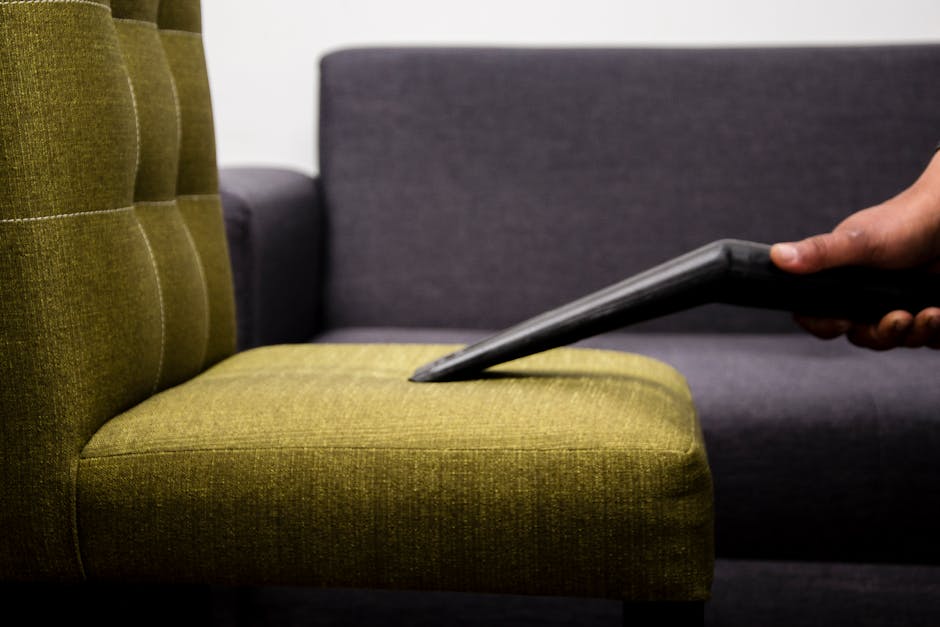
- Vacuum thoroughly. Use a suitable upholstery tool to remove loose dust, crumbs, and debris from creases, buttons, and under cushions.
- Pre-treat stains carefully. Work from the least aggressive option first. Fresh stains often need a very different approach from older, set-in marks.
- Clean with the right method. Choose low-moisture, foam, steam, or extraction depending on fabric and access.
- Control moisture. Do not flood the material. Over-wetting can affect padding, stitching, and drying time.
- Dry properly. Improve airflow, avoid immediate heavy use, and check for damp pockets in seams or corners.
- Final inspection. Look at the piece in natural light if possible. Check for tide marks, residual smell, or miss areas around edges.
A shop owner once told us the best part of a proper clean was not the visible change, but the fact that the room stopped smelling "like old coffee and yesterday." That is a very normal reaction, by the way. Fresh upholstery changes the whole atmosphere of a place.
Expert Tips for Better Results
There are a few habits that make a noticeable difference, especially in commercial spaces where time is tight and expectations are high.
- Act on spills quickly. The sooner a stain is handled, the less likely it is to migrate deep into the fibres.
- Rotate cushions if possible. Even wear keeps the upholstery looking more balanced.
- Choose low-traffic times. Early mornings or closed hours reduce disruption and help drying.
- Ask for fabric-specific treatment. Generic cleaning can be risky on delicate textiles.
- Keep drinks away from soft seating. This sounds obvious. Still, coffee cups have a talent for surviving exactly where they should not.
- Use protective measures where appropriate. Some fabrics benefit from approved protection after cleaning, but it should suit the material and the manufacturer guidance.
- Plan upholstery with the rest of your cleaning routine. If your premises also needs window cleaning or a broader one-off cleaning visit, combining tasks can save time and make the finish feel more complete.
One small but important tip: let the upholstery tell you what it needs. If a fabric is fragile, shiny, or already stressed, aggressive cleaning may do more harm than good. A careful, slightly slower clean is often the smarter choice.
Common Mistakes to Avoid
Most upholstery problems during cleaning come from rushing, guessing, or using too much water. It is usually one of those three. Sometimes all three, if the day has gone sideways.
- Skipping the test patch. Colour loss or fibre distortion is much harder to fix than it is to prevent.
- Using the wrong chemistry. Harsh products can strip colour, leave residue, or damage delicate fabric finishes.
- Over-wetting the filling. This can create odours, slow drying, and even encourage mould in the wrong circumstances.
- Scrubbing stains aggressively. Friction can spread the mark or damage the pile.
- Ignoring the frame and seams. Soil collects in the awkward places, and that is where problems often hide.
- Putting furniture back into service too soon. Premature use can re-soil damp fabric or leave pressure marks.
Another common mistake is assuming all upholstery can be treated the same way. It cannot. Leather, wool, linen blends, synthetic fibres, velvet, and textured fabrics all react differently. That is why the first five minutes of inspection matter so much. It is a bit boring, granted, but worth it.
Tools, Resources and Recommendations
You do not need a truck full of kit to understand what good upholstery cleaning involves. But the right equipment does help. A professional approach typically relies on:
- an upholstery vacuum attachment
- soft brushes for dry soil removal
- microfibre cloths for spot work
- fabric-safe pre-treatment solutions
- controlled extraction or low-moisture equipment
- air movers or strong natural airflow for drying
- protective pads for surrounding flooring where needed
For businesses comparing cleaning support, it can be useful to look at a provider's broader service range and process discipline. A company that also offers carpet cleaning and rug cleaning is often familiar with fabric care variations, which matters when you are dealing with mixed materials in one premises.
When reviewing a cleaner or company, ask practical questions: How do they handle delicate fabrics? Do they test first? How long is the drying window? What happens if a stain cannot be fully removed without risking the fabric? Good answers sound measured, not overconfident.
Law, Compliance, Standards, or Best Practice
For shops in London, upholstery cleaning is usually guided less by one single law and more by a combination of common-sense hygiene, safe working practice, insurance expectations, and manufacturer care instructions. If your premises are open to the public, you should think about safe access, slip risks from damp floors, electrical safety around equipment, and whether cleaning can be done without creating unnecessary disruption.
In practical terms, that means cleaners should work in line with sensible health and safety procedures, use products appropriately, and avoid leaving trip hazards or excess moisture behind. If you are a tenant, you may also need to consider landlord or lease obligations about keeping the premises in good order. No drama, just paperwork doing its usual thing.
It is sensible to use an insured cleaning provider and to confirm that their approach suits your setting. Where suitable, look for clear communication about methods, risk controls, and what is excluded. If you want to understand the business approach behind those safeguards, the company's insurance and safety information and health and safety policy are worth reading before you book. For payment-related reassurance, payment and security can also help explain how transactions are handled.
Best practice is simple enough: protect the fabric, protect the people, protect the trading environment. Everything else follows from that.
Options, Methods, or Comparison Table
Different upholstery types and business settings call for different methods. The comparison below is a useful shorthand, though the fabric itself always has the final say.
| Method | Best for | Strengths | Watch-outs |
|---|---|---|---|
| Dry vacuuming and brush care | Routine maintenance | Fast, low disruption, good for daily upkeep | Won't remove deep staining or odour |
| Foam cleaning | Sensitive fabrics with moderate soil | Controlled moisture, often suitable for commercial spaces | May need careful residue removal |
| Hot water extraction | Durable fabrics and heavier soiling | Deep soil removal, strong refresh effect | Longer drying time, not suitable for all textiles |
| Encapsulation | Regular maintenance in busier premises | Low-moisture, quick turnaround | Less effective on aged or embedded stains |
| Hand cleaning / spot treatment | Delicate pieces and targeted stains | Precise and fabric-aware | Time-consuming, depends heavily on skill |
If your shop has mixed interiors, you may end up using more than one method. That is normal. A velvet armchair near the window and a practical synthetic bench near the till do not want the same treatment, and they should not get it.
Case Study or Real-World Example
Consider a small Belgravia boutique with two upholstered benches in the fitting area and a pair of fabric chairs near the consultation desk. The benches look fine from a distance, but close up there is a darker edge where handbags, coats, and repeated seating have done their work. One chair also has a pale coffee ring that has been there so long it has started to blend in, which is never a great sign.
The shop manager books a careful upholstery clean before a weekend event. The cleaner inspects the fabric, tests a hidden panel, and uses a low-moisture process because the shop cannot afford a long shutdown. The visible marks soften, the odour lifts, and the seating looks brighter under the lights. More importantly, the manager does not have to move furniture out for days.
What made the difference was not some miracle product. It was sequencing, restraint, and a sensible expectation of results. That is usually the real story with commercial upholstery. Not dramatic. Just well handled.
Practical Checklist
Use this checklist before booking or carrying out upholstery cleaning in a Belgravia shop.
- Identify the fabric type and check care instructions if available.
- Inspect for stains, wear, loose stitching, or colour changes.
- Decide whether cleaning needs to happen outside trading hours.
- Confirm the method suits delicate or mixed upholstery.
- Test a hidden area before full cleaning.
- Protect surrounding flooring and nearby fixtures.
- Plan for drying time and airflow.
- Avoid using the furniture until it is fully dry.
- Review whether adjacent services, such as office cleaners or broader cleaning company support, would help with the overall refresh.
- Schedule the next maintenance clean before the upholstery starts looking tired again.
Quick takeaway: good upholstery cleaning is part fabric care, part timing, part judgement. If you get those three right, the result usually looks quietly impressive, which is exactly what a good shop interior should do.
Get a free quote today and see how much you can save.
Conclusion
Motcomb Street and the wider Belgravia area reward businesses that pay attention to detail. Upholstery might not be the first thing a shop owner thinks about in the morning, but customers often notice it without realising they have noticed. Fresh, well-kept seating supports trust, comfort, and a calmer sense of quality.
The smartest approach is not to wait until fabric looks obviously dirty. It is to build upholstery care into your regular maintenance rhythm, choose methods that suit the material, and work with a provider that understands commercial spaces. If you do that, your shop stays sharper for longer, and the whole room feels more considered.
And honestly, that slightly polished, well-kept feeling never really goes out of style.
Frequently Asked Questions
How often should shop upholstery in Belgravia be cleaned?
It depends on foot traffic, fabric type, and how visible the seating is to customers. Busy customer-facing areas usually benefit from planned maintenance rather than waiting for obvious staining. In practice, many shops prefer a routine clean before peak seasons or after heavier trading periods.
What is the best upholstery cleaning method for delicate fabrics?
Delicate fabrics often do best with low-moisture or hand-cleaning methods after a proper test patch. Velvet, wool blends, and textured materials need extra care because aggressive cleaning can flatten the pile or affect colour. A cautious approach is usually the safer bet.
Can upholstery cleaning remove old stains completely?
Sometimes yes, sometimes partially, and sometimes not without risking damage. Older stains may have bonded with the fibre or backing. A good cleaner will explain what is realistic before starting, rather than promising miracles. That honesty matters.
How long does upholstery take to dry after cleaning?
Drying time varies by fabric, method, room temperature, and airflow. Low-moisture methods usually dry faster than extraction-based cleaning. For shop settings, scheduling and ventilation make a big difference, so it is worth planning the job around trading hours.
Will upholstery cleaning disrupt shop trading?
It does not have to. Many commercial cleans are arranged before opening, after closing, or during quieter periods. The key is choosing the right method and making sure the team can work around your customer flow with as little fuss as possible.
Is it worth cleaning upholstery instead of replacing it?
In many cases, yes. Cleaning is usually far less disruptive and more cost-effective than replacement, especially when the frame and padding are still in good condition. If the fabric is structurally worn or damaged, replacement may still be the better call.
Can upholstery cleaning help with odours?
Yes, provided the smell is coming from soil, spills, or general use rather than deeper damage. Regular cleaning often removes the dull, stale note that builds up in busy interiors. If the smell returns quickly, there may be a deeper issue to inspect.
Should upholstery cleaning be done with carpet cleaning at the same time?
Often, yes. In customer-facing premises, combining upholstery and carpet care can create a more complete refresh and reduce downtime. It also helps the whole space look consistent, which customers tend to respond to positively.
What should I ask before booking upholstery cleaning?
Ask about fabric testing, drying time, stain limits, insurance, and the method they plan to use. It is also sensible to ask how they handle delicate pieces or mixed materials. If the answers sound clear and measured, that is a good sign.
Can I clean shop upholstery myself?
Minor maintenance, yes. Full cleaning, especially on delicate or premium furnishings, is where things get riskier. DIY products can leave residue, cause ring marks, or over-wet the fabric. If the seating is important to the presentation of your shop, a professional clean is usually the safer route.
What if my upholstery is leather rather than fabric?
Leather needs a different process entirely. It is cleaned and conditioned differently from fabric upholstery, and using the wrong product can dry it out or leave it sticky. Make sure the treatment is specific to the material rather than assumed from the word "upholstery."
How do I keep upholstery looking cleaner for longer?
Vacuum regularly, respond to spills quickly, avoid eating or drinking near soft seating where possible, and schedule maintenance before dirt becomes obvious. A little routine care goes a long way. Honestly, it is the small, boring habits that usually save the most trouble.